

The 2021 school year is well underway, but at the end of summer we were all able to rendezvous outside for a quick photo! Our current group has expanded. Please see our research team link for more information about our stellar new post-doc., undergraduates, and graduate researchers!
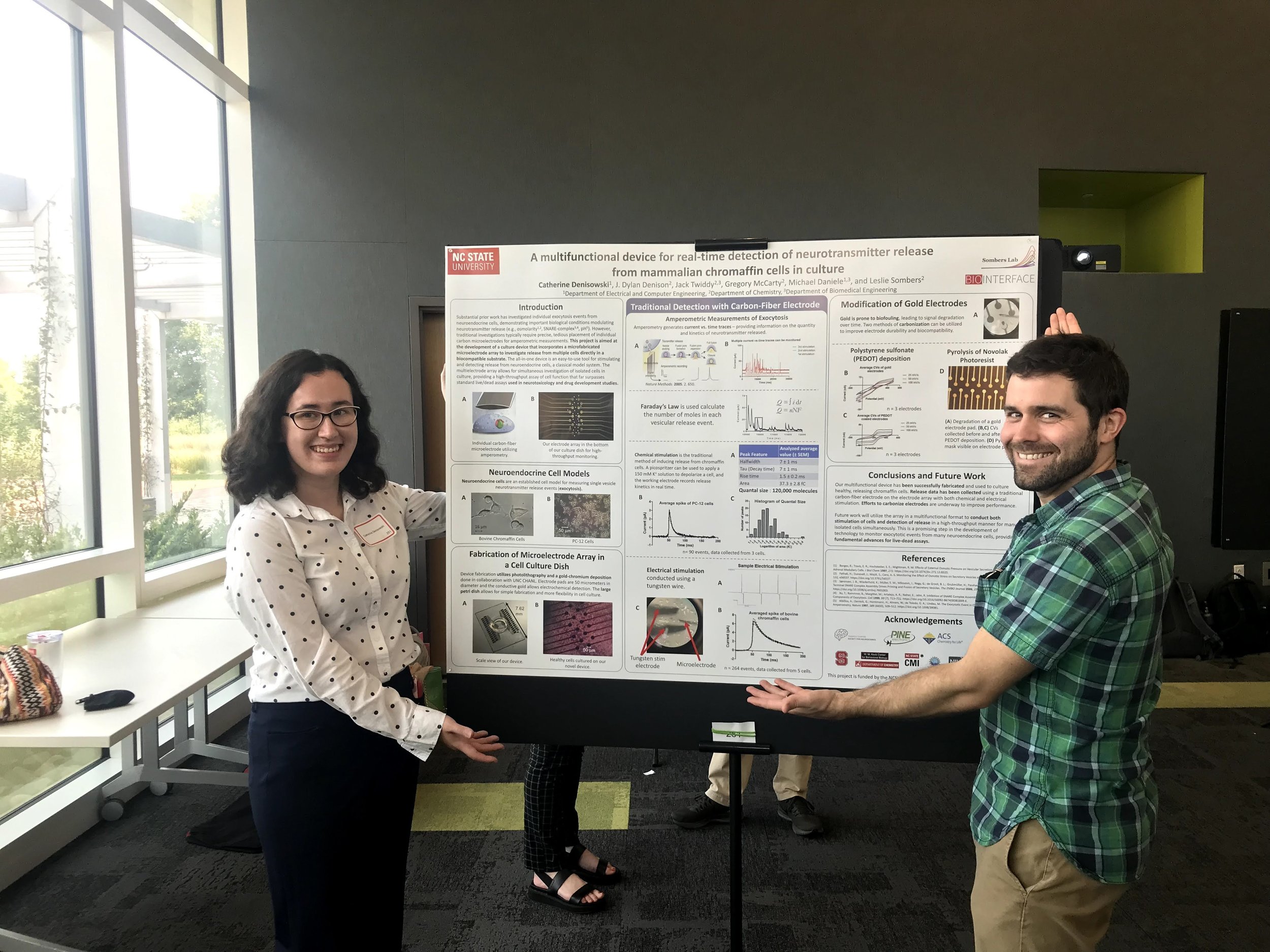
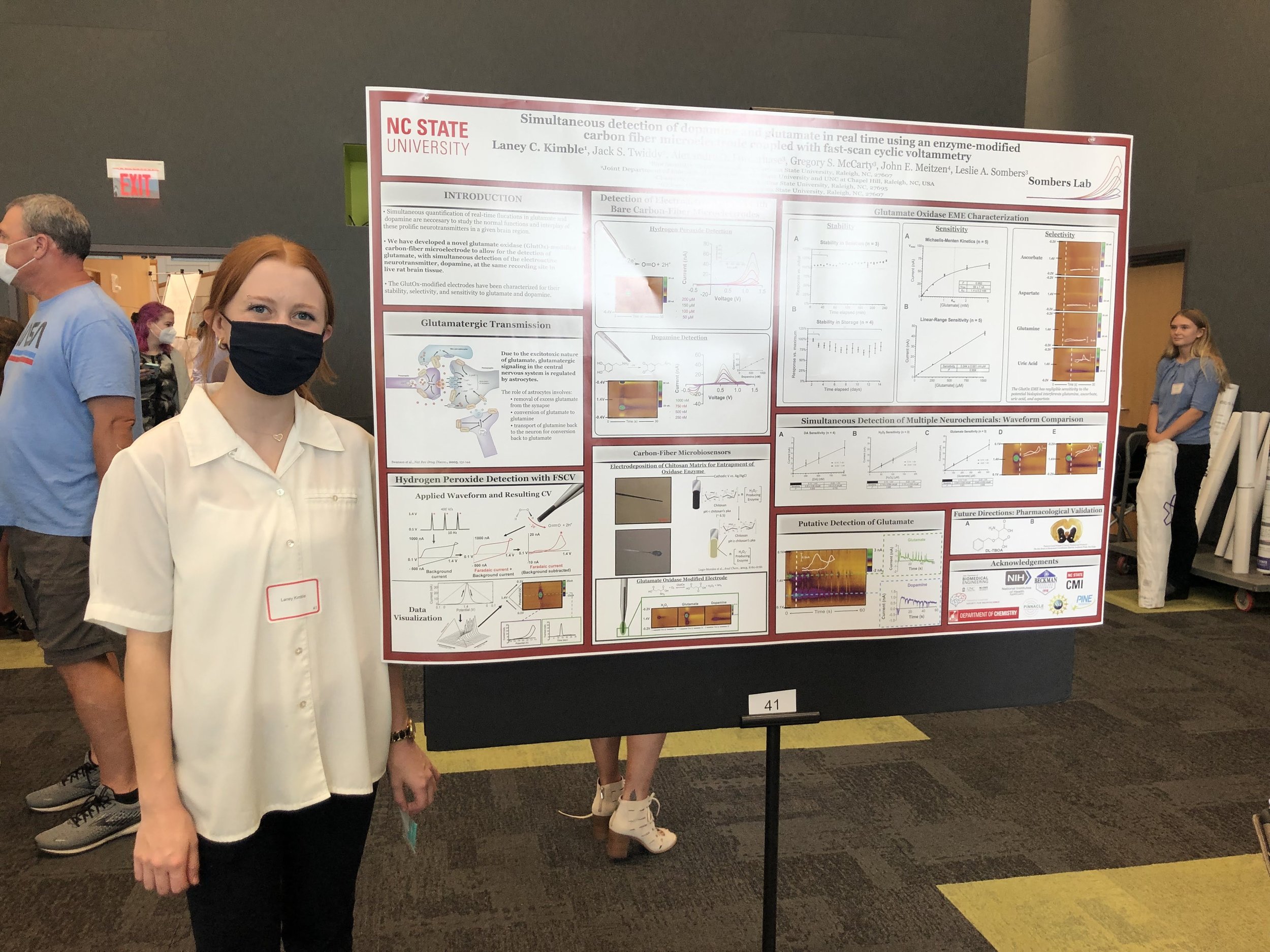
Undergraduate researchers Lailah Ligons, Laney Kimble, Emilie Norwood, Ruby Shah, and Lauren Lamothe presented their work at the Summer Undergraduate Research Symposium
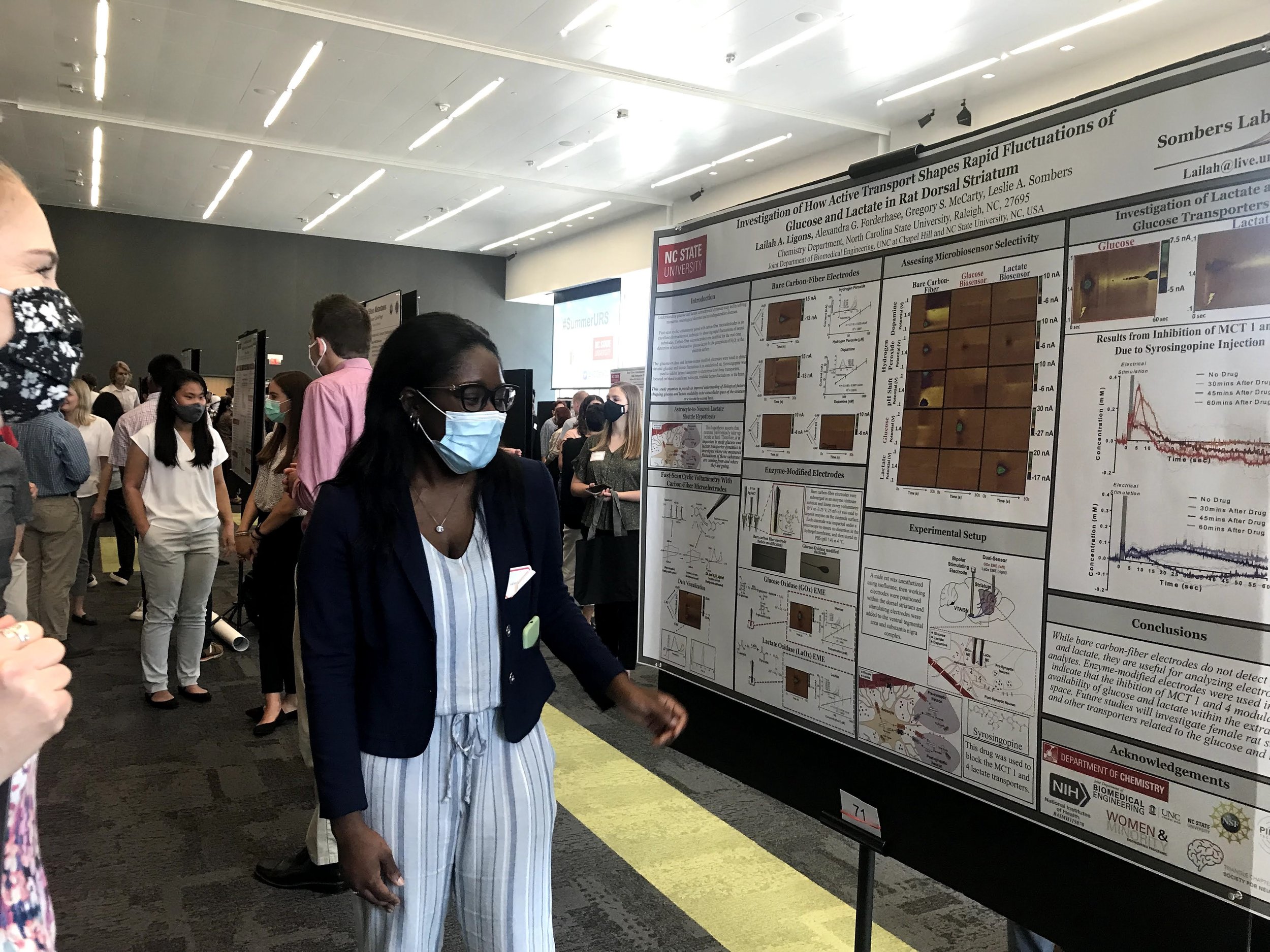
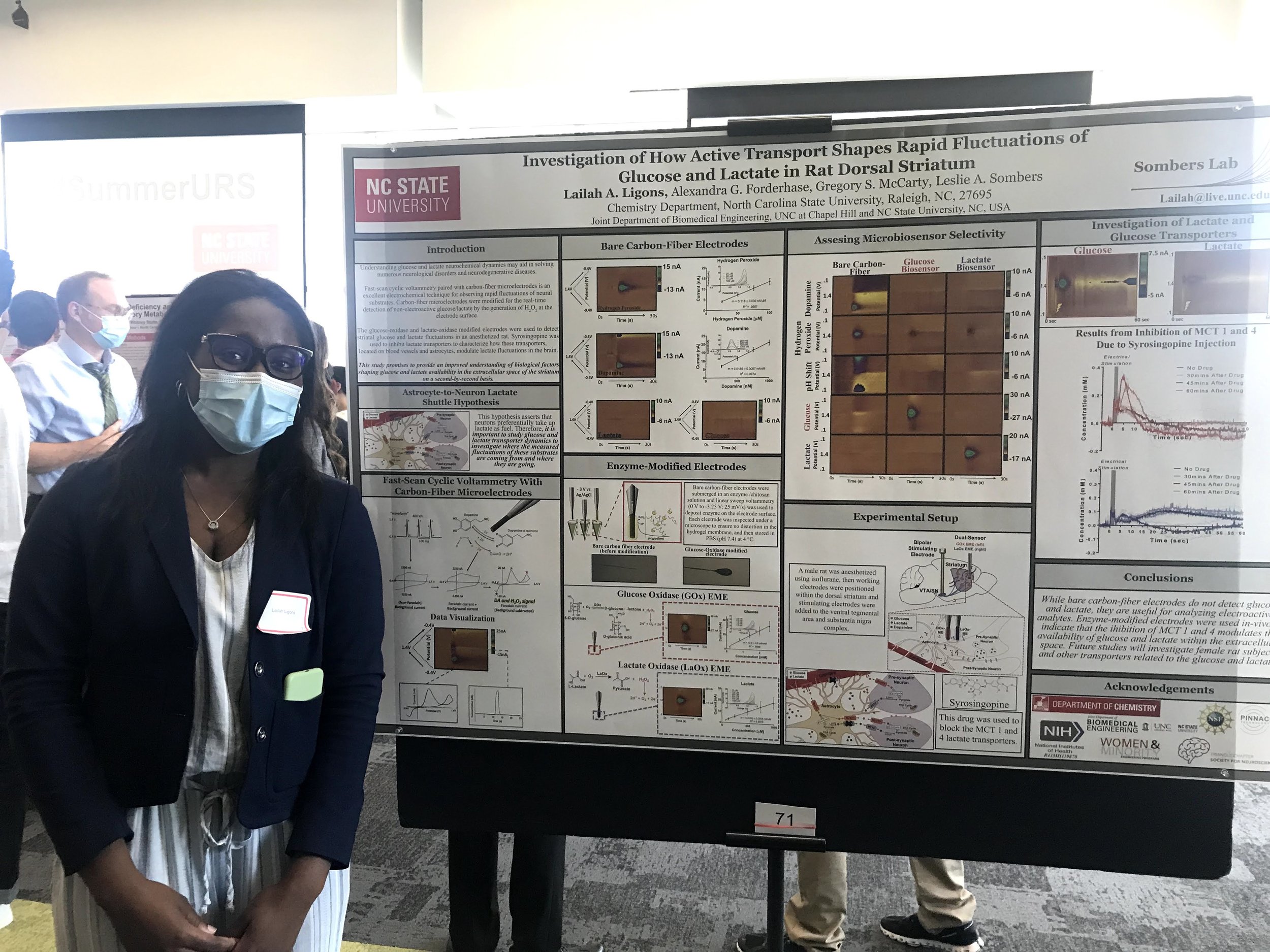
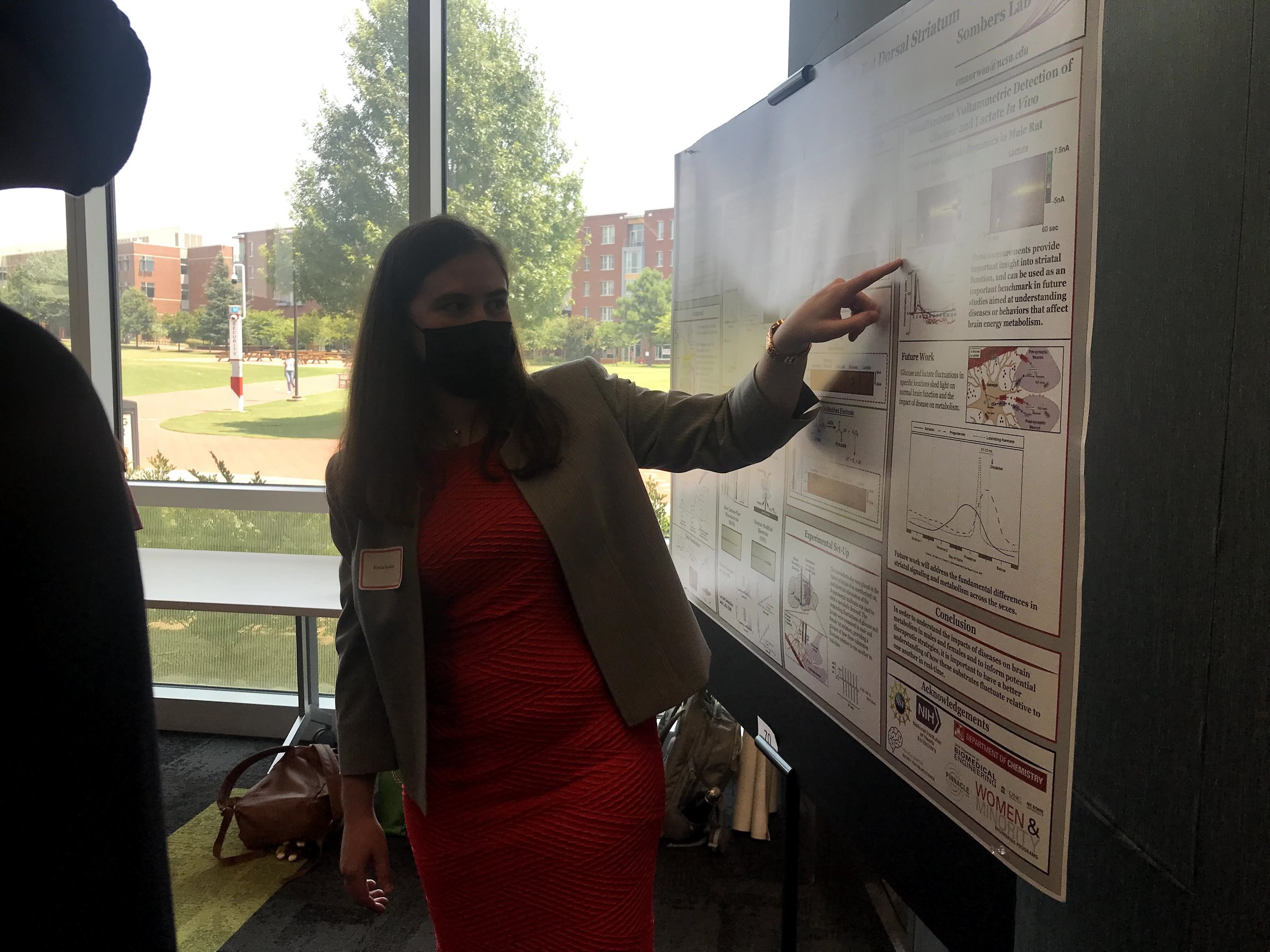

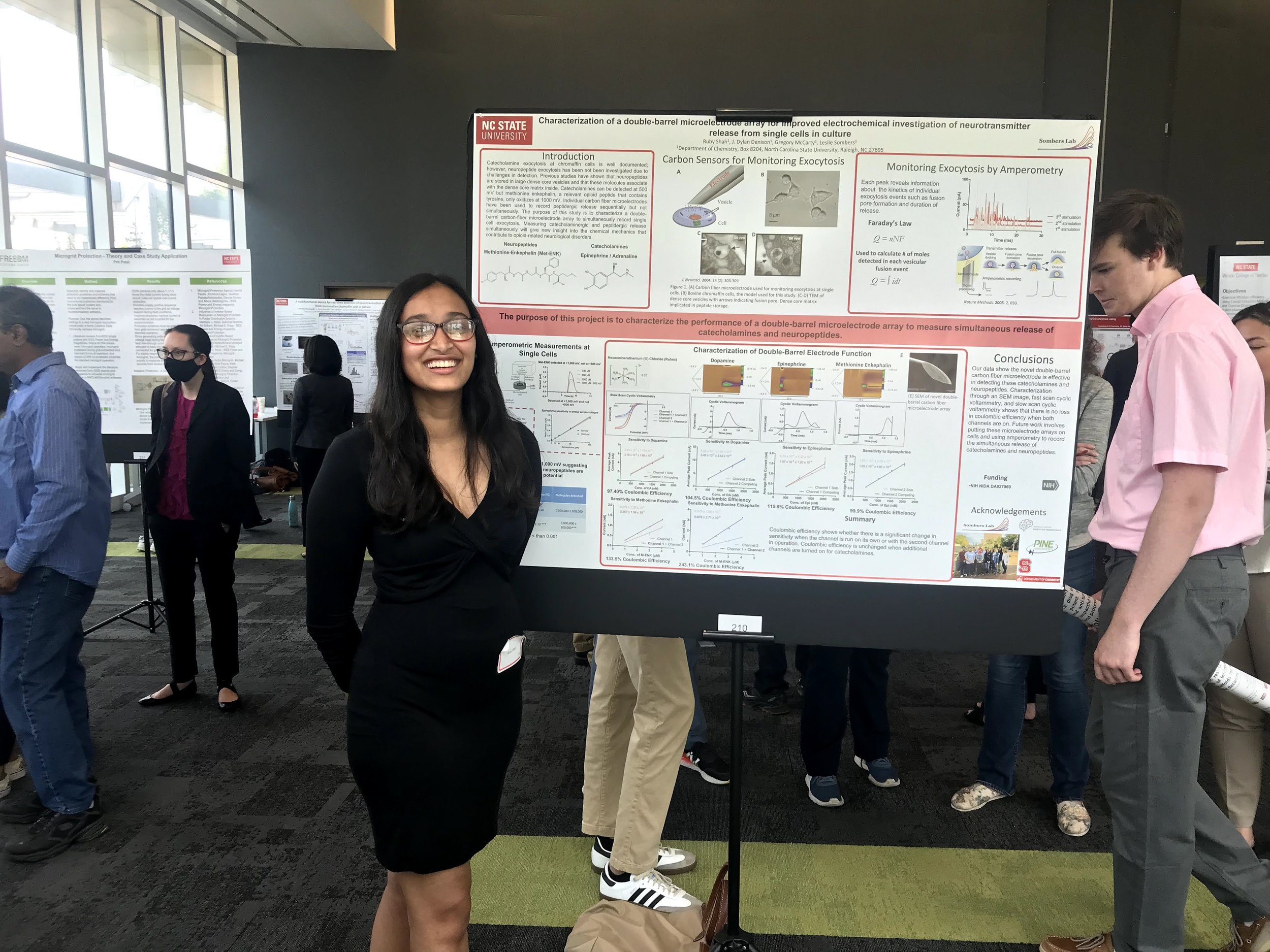

Here at N.C. State we’re swinging into our first week of classes. Many professors, like our own PI, have adopted distance learning formats to ease and stop the pandemic spread. Dr. Sombers is “casually” juggling research, managing her lab, guiding her daughters through remote learning, and running her virtual classroom for the current chemistry undergraduates.
Class just started, but it might already be time to take a break!


Congratulations to Alexandra Forderhase, Hannah Styres, Christie Lee and the entire team on this new publication! Glucose and lactate are key neuroenergetic substrates, but tremendous ambiguity remains regarding how these species change on a second-by-second basis in live brain tissue. This work is important because it uses electrochemistry to provide an unprecedented direct comparison of glucose and lactate dynamics in response to metabolic demand elicited by neuronal activation. Click here to see for yourself!👇
https://rdcu.be/b5C09
Curious about our research? Thinking about going to NC State for graduate school? Please view our lab introduction video if electrochemistry, brain science, and circuits (both neurological and electrical!) interest you!
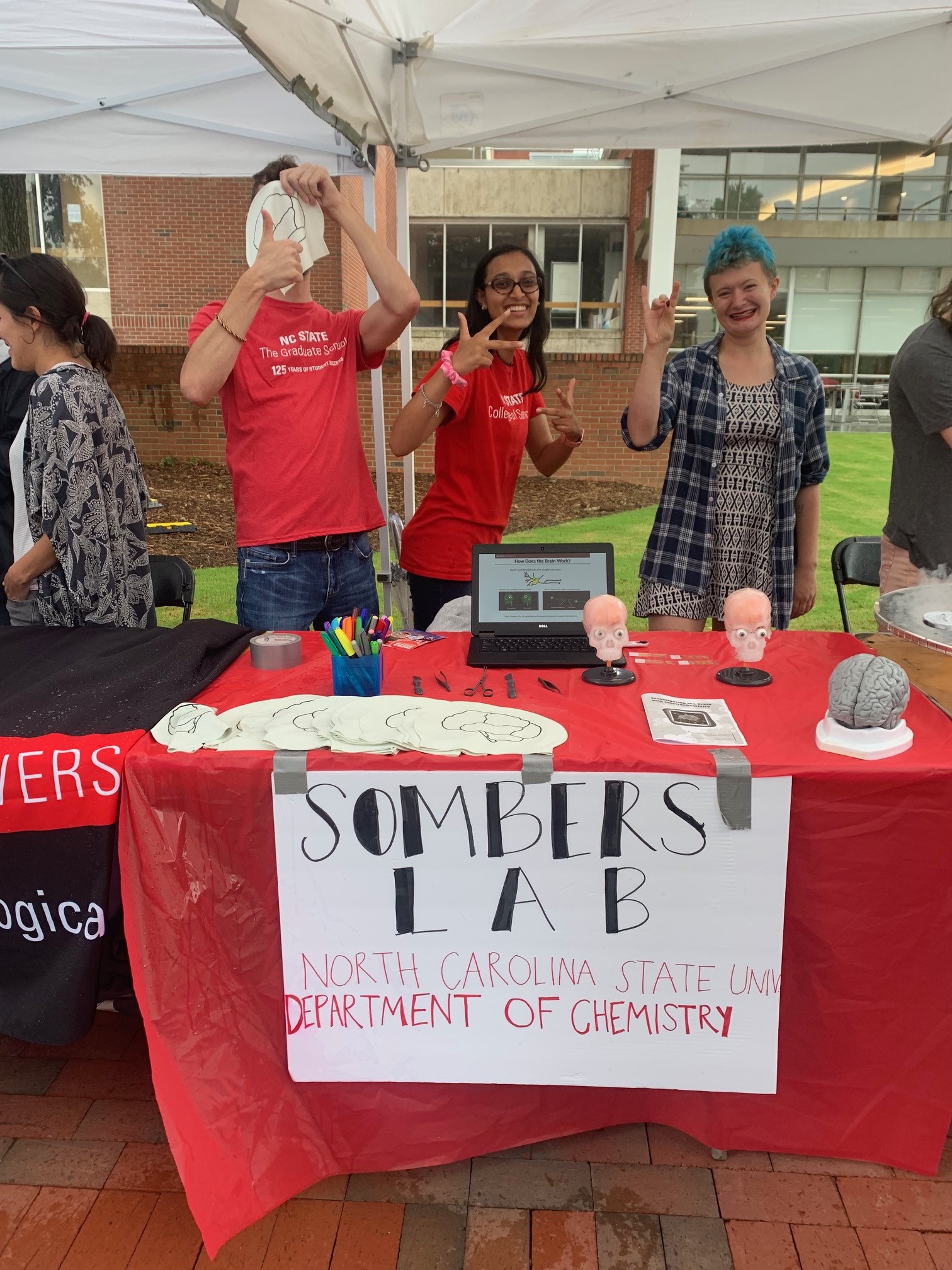
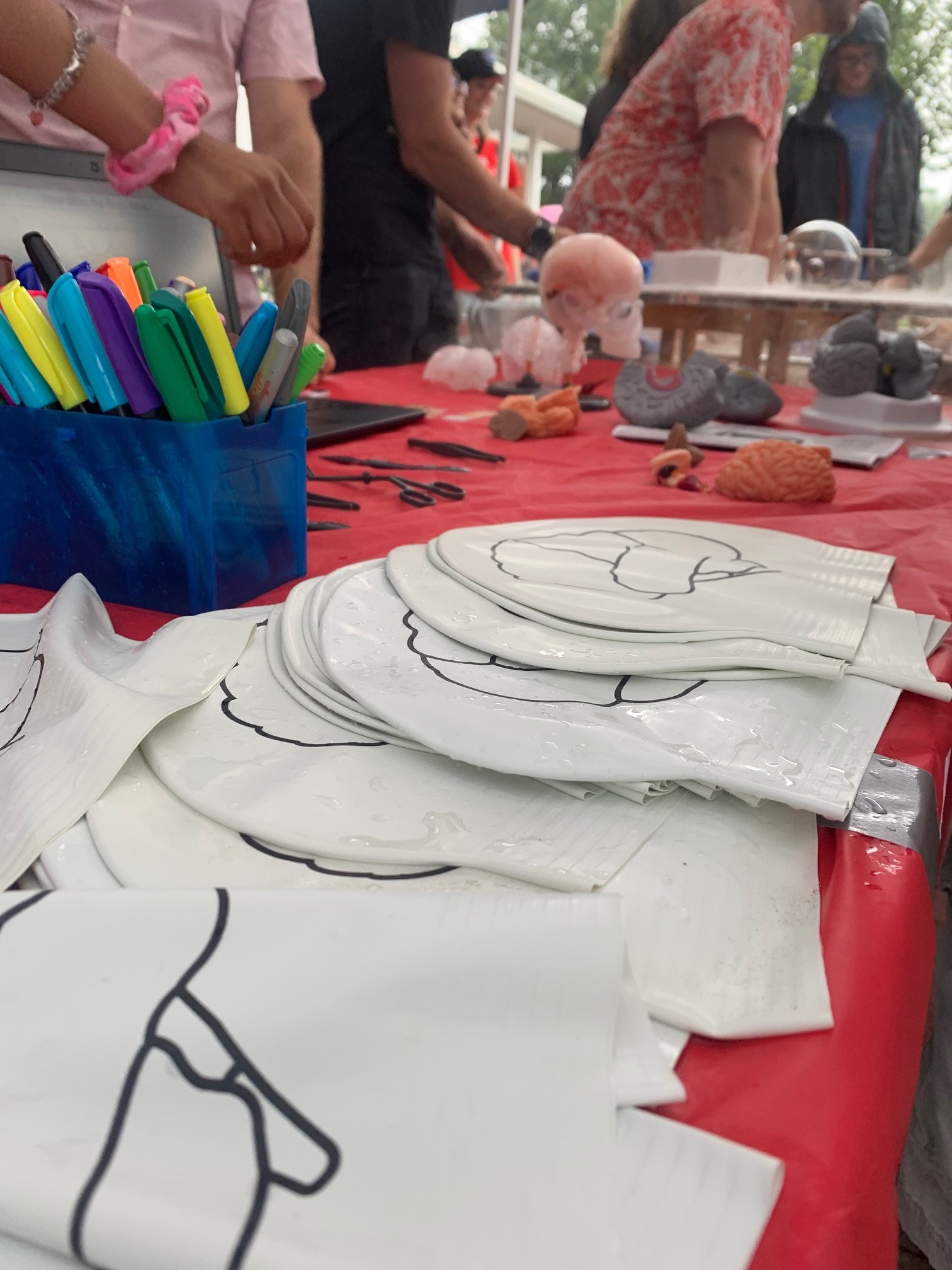
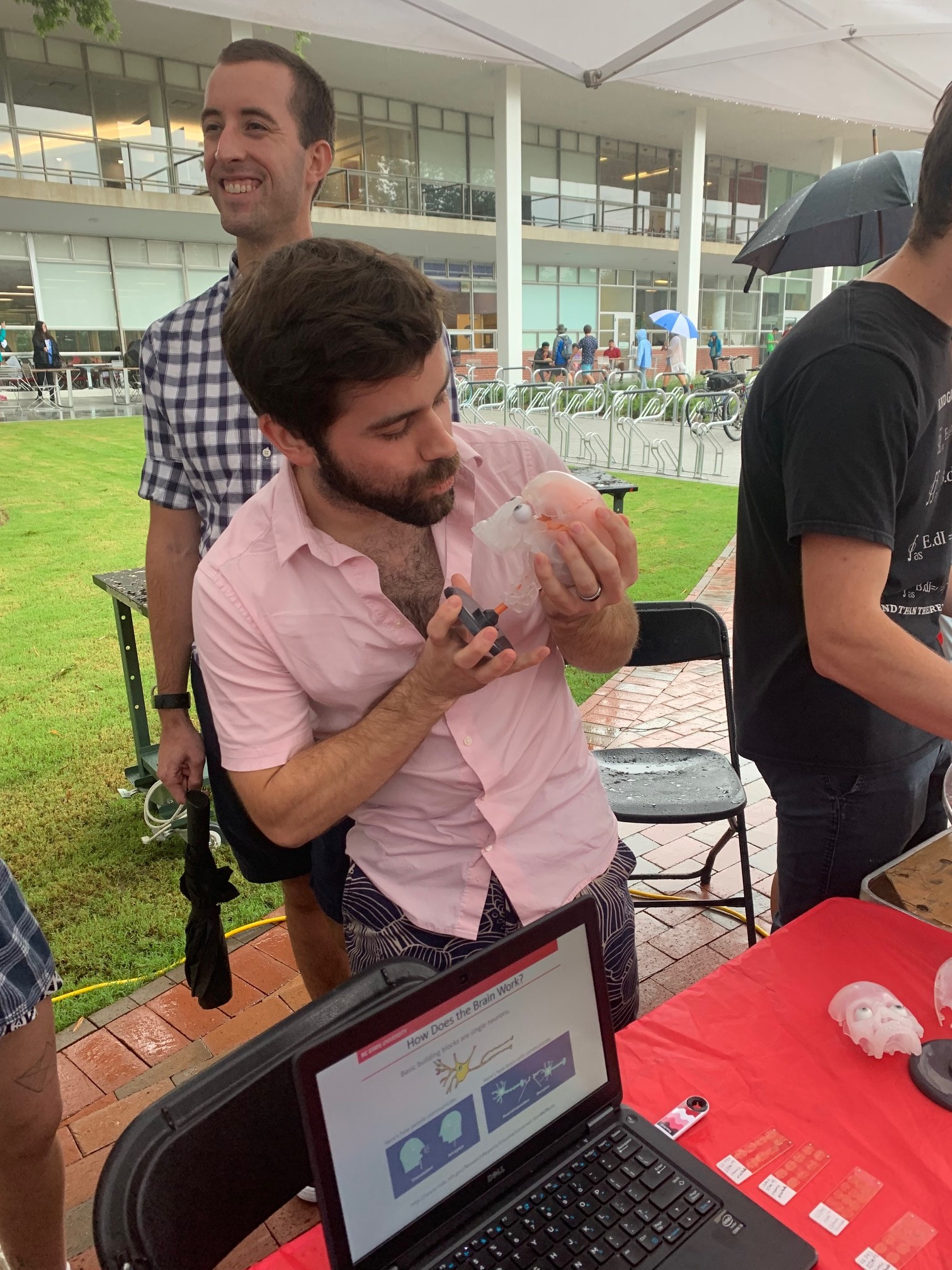
Last weekend, Packapalooza drew large crowds despite the rainy weather. Luckily for us, the Sombers Lab was representing the chemistry department under a tent! Our brain models, sample slides, and researchers all stayed nice and dry while they told NCSU students about all the different kinds of neurochemical research occurring right here at NC State!

NC State offers amazing opportunities for undergraduates to engage, develop, present, and publish research. In our lab, we’re very proud to have Hannah Stylers. Hannah is just now starting her junior year and already rocks some impressive research credentials!

Hanna presented her work on enzyme modified electrodes this summer during the 18th Annual NCSU Summer Undergraduate Research and Creativity Symposium. Working under one of our 2nd year grad students, Hannah has been developing methods for electrochemical detection of new analytes not previously detectable by FSCV.

Congrats, Hannah! She will be continuing her summer projects into the school year—exploring the brain’s use of glucose and lactate in real time.
We may be biased, but FSCV is a beautiful technique. However, sometimes our signal can get a little muddled with pH shits and drift due to changes in the brain or on our electrode. Our technique uses background subtraction to look at analyte of interest, so background drift can mess up this signal. As such, a lot of neuroscientists will monitor chemical release for a minute or two before collecting a new background to avoid drift problems.
Wouldn’t it be nice to monitor your experiment for longer? Maybe even clean up some of that drift, interference, and pH?
New from the Sombers’ lab, Carl Meunier has a solution for you!
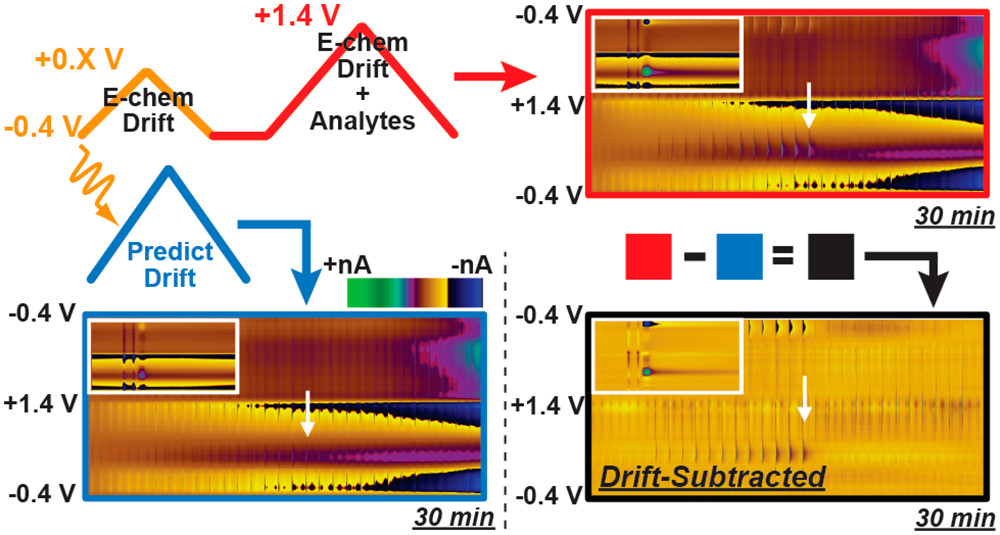
Using a small potential waveform as a predictor of drift, Carl can view drift over time as it occurs without interrupting our signal of interest! Now we can look at dopamine fluctuations over longer periods of time without sacrificing the quick-scan measurements.
This technique not only helps clean up your data but can more accurately report dopamine concentrations during large release events with interference.
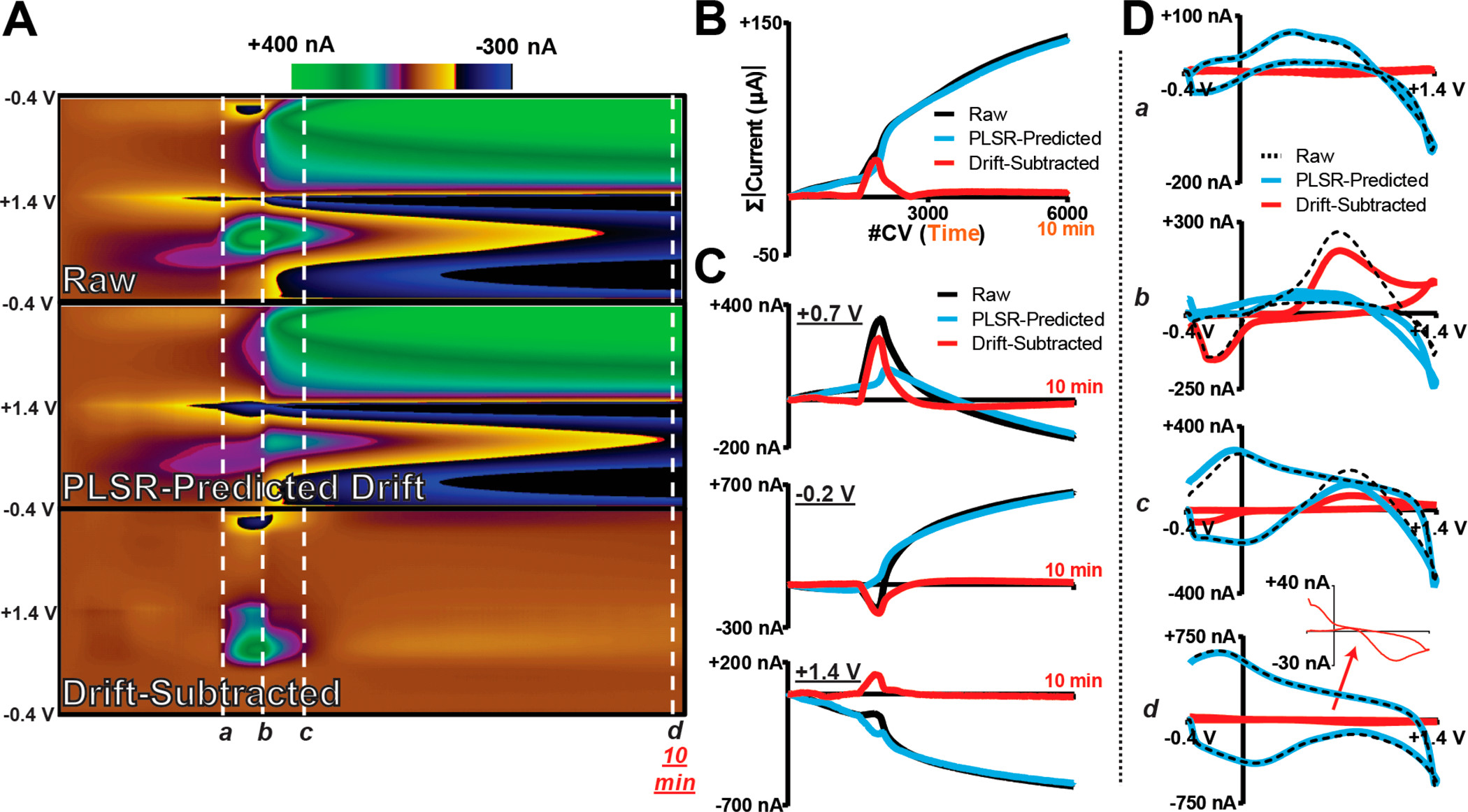
Please see our paper in Analytical Chemistry for full details on this exciting, new technique: https://pubs.acs.org/doi/full/10.1021/acs.analchem.9b01083
Electrochemical circuits are often used to study energy, but what about biological sources of energy? How the brain uses its energy stores is still not fully understood. As such, Sombers’ lab is looking for answers.
Alex Forderhase has been producing some sweet data using enzyme-modified electrodes for glucose and lactate monitoring. Here she is presenting her work last month for the 20th Annual Student/Postdoc Symposium of the W.M. Keck Center for Behavioral Biology:
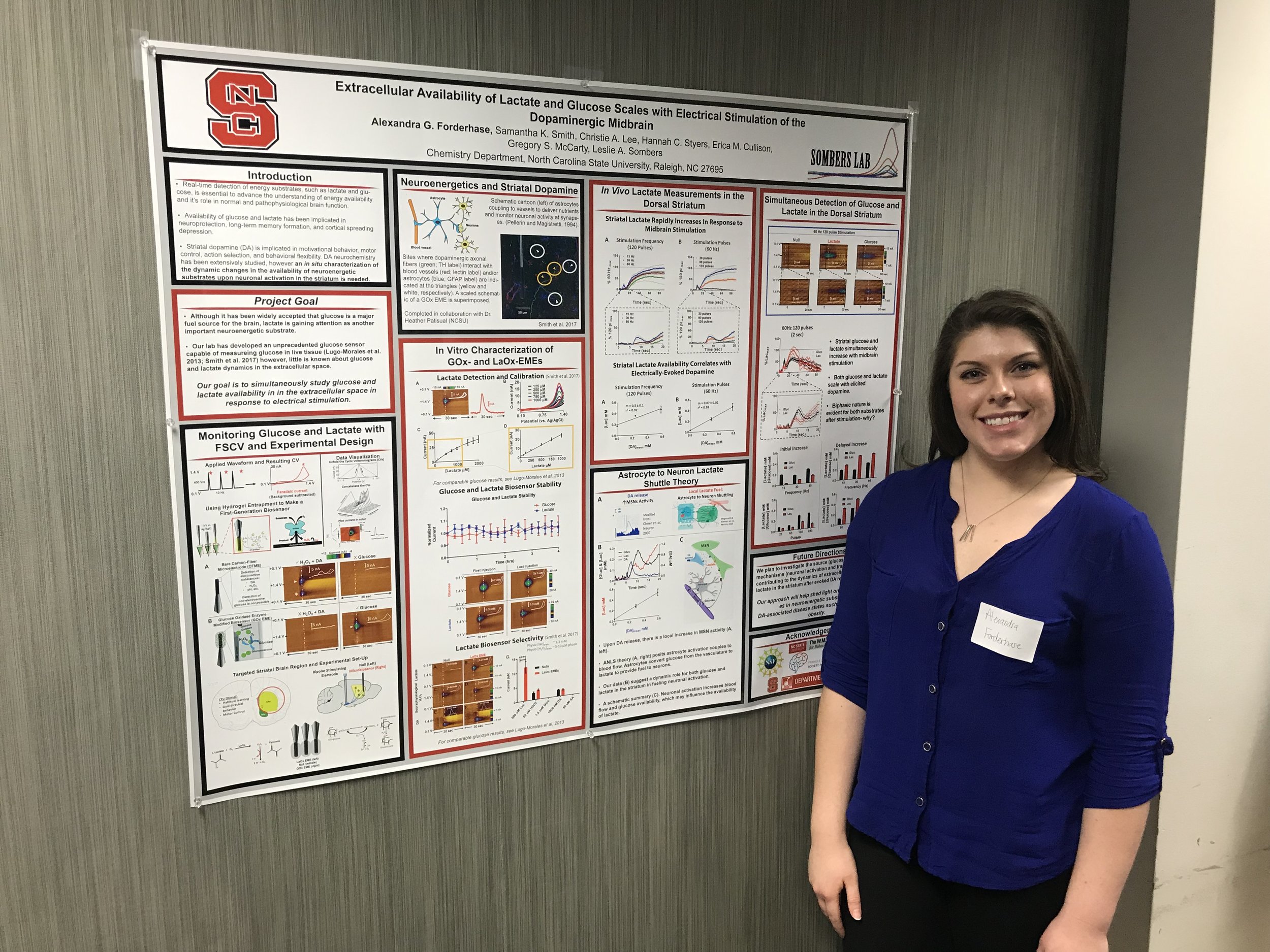
Alex Forderhase at the Keck Center for Behavioral Biology symposium in spring 2019
Alex has been crafting new techniques for looking at electro-chemically inactive molecules. By bringing in new molecules for analysis by FSCV, she can monitor brain activity in new, unexpected ways!
The Sombers lab has been kicking it into high gear with graduating students, post-docs moving on to their next big opportunity (congrats Dr. Sam Smith!), and training three new first-year students.
Finally, we’ve all been able to rendezvous for a group photo. Meet the new Sombers lab!
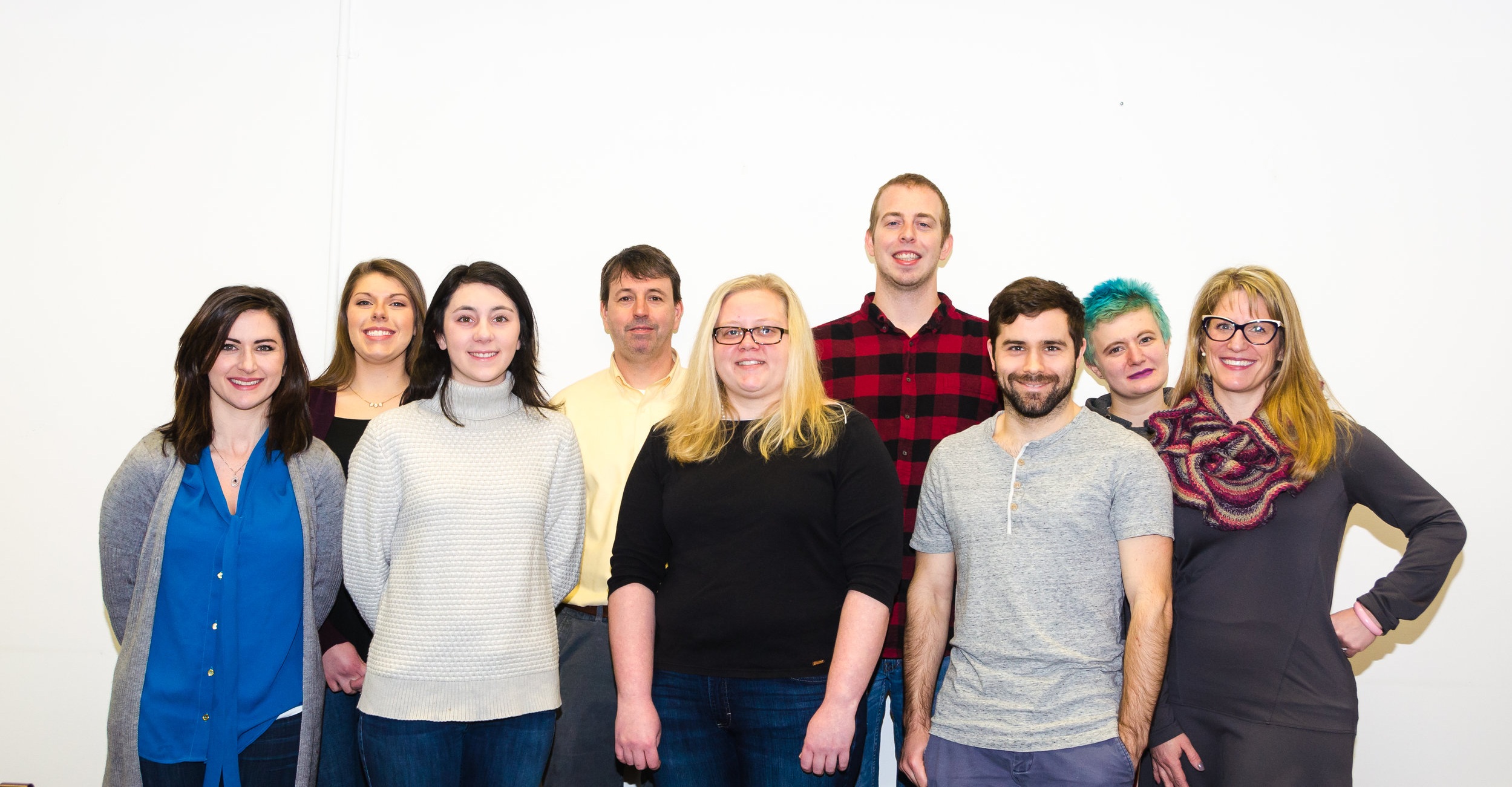
Check out our lab bios for more information on our team.
Here’s to dopamine, peptides, and electrochemistry for all its use in analyzing the brain!
